X Growth Engine
Viral velocity detection, prospect tracking, and a live content queue.
A personal growth platform with a content queue, viral velocity detector, prospect outreach tracker, engagement analytics, and a content library. Not a product. Not a demo. A system built to drive real follower growth from real scraped data, running every day.
X Engine product page with Three.js particle network
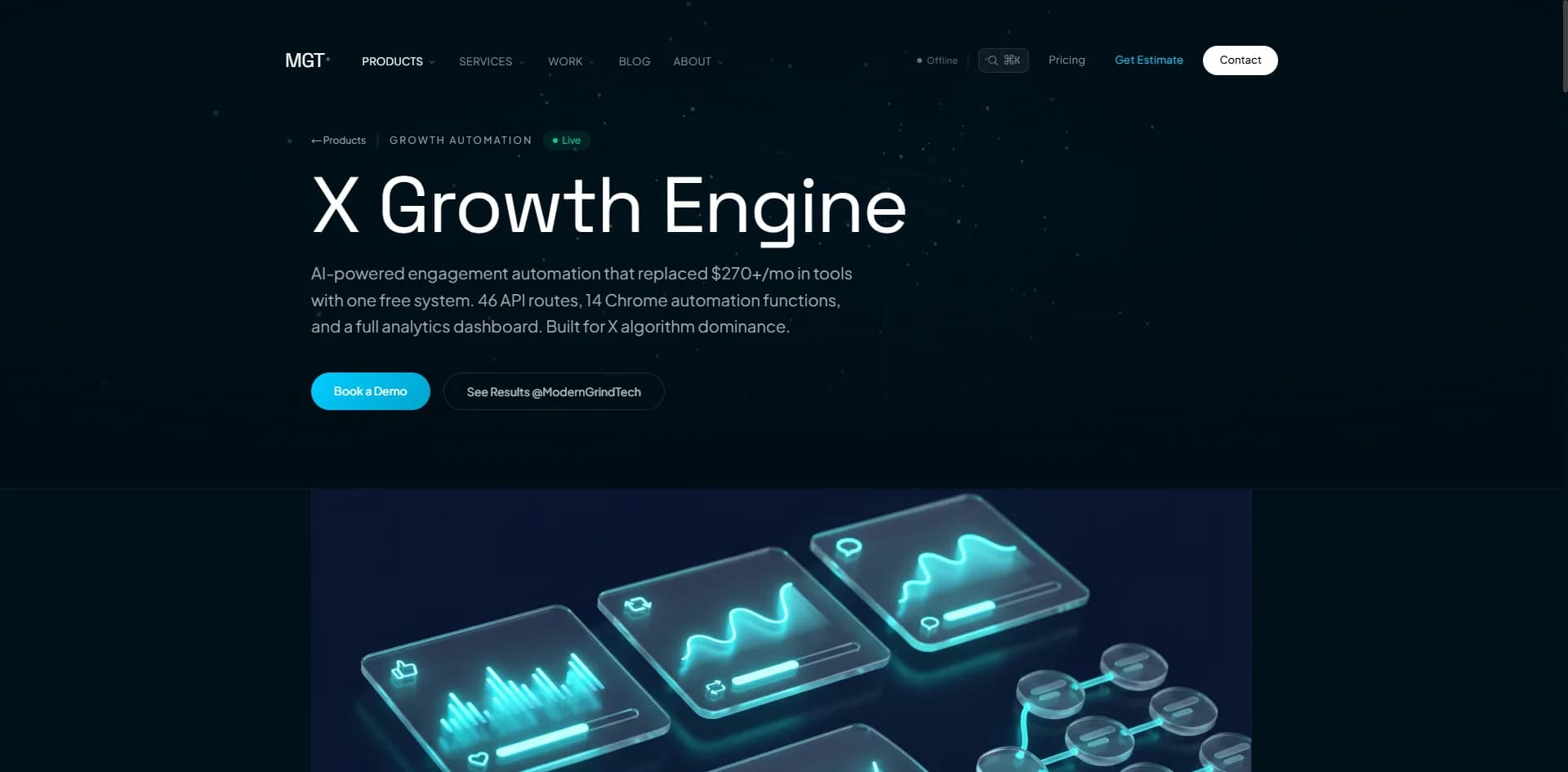
Feature grid showing 12 core automation systems
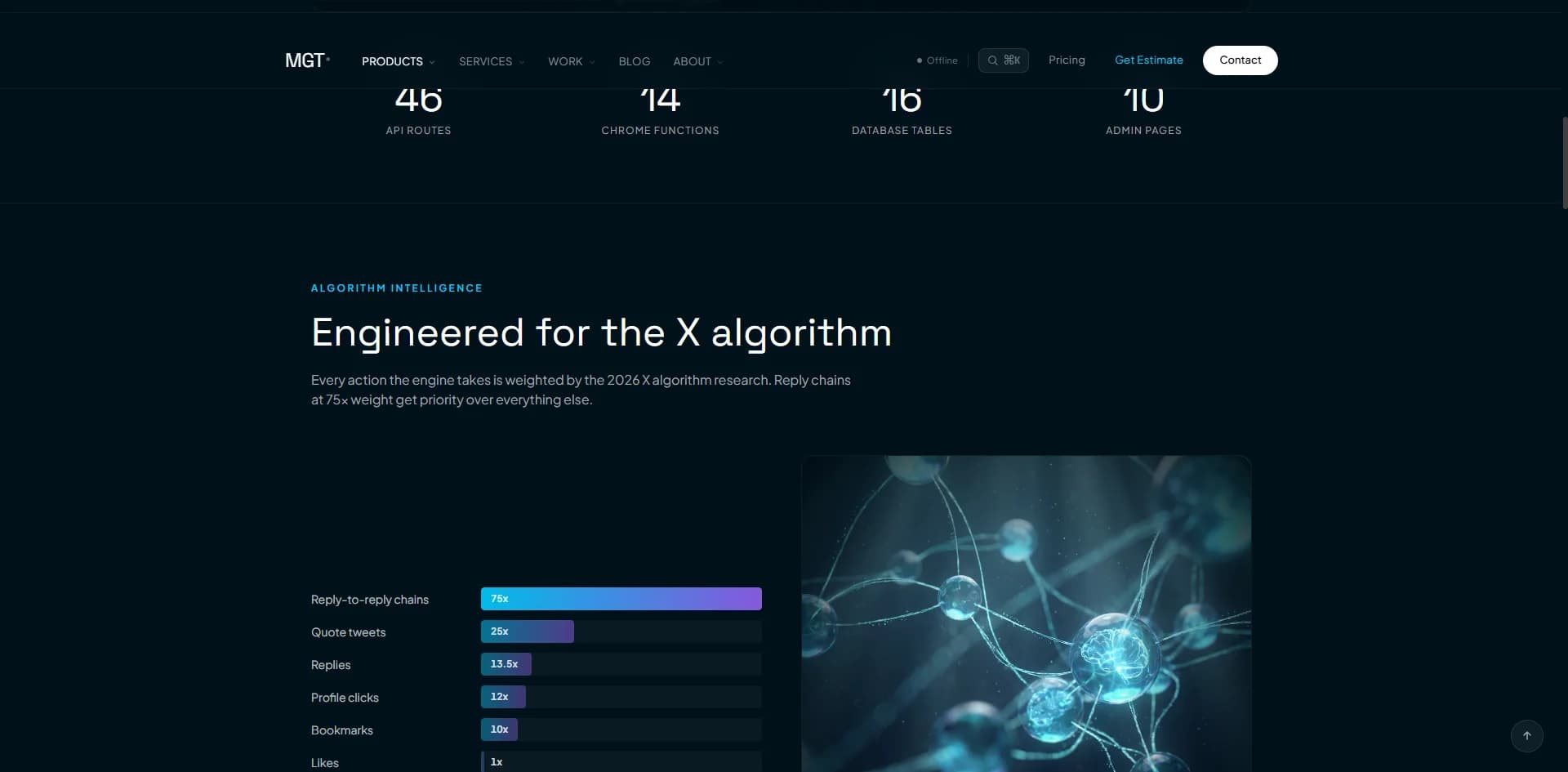
The Problem
Growing on X is a systems problem.
Building in public on X requires consistent posting, strategic reply engagement, prospect tracking, and performance analysis across hundreds of posts. Doing that manually is unsustainable. Spreadsheets break. Schedulers are dumb. Analytics tools are expensive and none of them are wired together.
The real challenge is not posting, it is knowing what to post when, which prospects to engage, whether a post is gaining velocity before it peaks, and what past content has performed well enough to repurpose. None of that exists out of the box.
The answer was to build a full-stack system from scratch: a database for all content and analytics, a smart scheduler, a velocity detector that surfaces breakout posts in real time, and an automation layer that handles the actual posting without leaving the browser.
The Solution
11 tables. One coherent growth system.
Content Queue
A database-backed queue where posts are drafted, tagged, and scheduled. The queue page is the source of truth for all outgoing content. Smart scheduling surfaces optimal posting windows based on historical engagement patterns.
Viral Velocity Detector
A real-time signal system that monitors engagement rates per post and flags content that is gaining velocity above baseline. When a post is breaking out, it surfaces immediately so follow-up content or replies can be stacked while the window is open.
Prospect Tracker
A CRM-style pipeline for identifying and engaging high-value accounts. Tracks outreach status, last interaction, reply rate, and mutual engagement. Every prospect move is logged so no follow-up opportunity is missed.
Engagement Analytics
A dashboard built on real scraped X data tracking impressions, likes, replies, reposts, profile visits, and follower velocity over time. No third-party analytics. All data lives in Neon Postgres and feeds the admin UI directly.
Content Library
A searchable archive of all past posts with performance metadata attached. High-performing posts are tagged and surfaced for repurposing. The library feeds the queue, so best content stays in rotation intelligently.
Chrome MCP Automation
The posting layer uses Chrome DevTools MCP to drive the browser directly. Posts are dispatched from the queue to X without API rate limits, without third-party schedulers, and with full control over timing and format.
System Architecture
26 routes. 7 admin pages. One data model.
The platform is organized into subsystems that share a single Neon Postgres database. Every admin page reads and writes through typed API routes backed by Drizzle ORM. The schema was designed upfront to support analytics aggregations without expensive query rewrites later.
Content Queue
6 routes
Draft, schedule, publish, delete, reorder, bulk-import from library
Analytics Engine
5 routes
Daily stats ingestion, follower delta, engagement rate, top posts, velocity feed
Prospect CRM
5 routes
Add prospect, update status, log interaction, bulk tag, outreach history
Content Library
4 routes
Archive post, search by tag/performance, flag for reuse, export queue
Velocity Detector
3 routes
Score post, fetch breakout feed, configure thresholds per content type
Admin Dashboard
3 routes
Platform health, queue depth, follower velocity summary, system config
Velocity Detector
Know when a post is breaking before it peaks.
The velocity detector is the technical centerpiece of the engine. Most creators find out a post performed well after it is over. The detector surfaces breakout signals while the post is still gaining momentum, so there is still time to act on it with replies, reposts, or follow-up content.
01
Engagement Baseline
The system establishes a rolling baseline engagement rate per post type using historical data from the analytics tables. Baseline is recalculated daily as new data comes in.
02
Velocity Scoring
Each new post is scored against the baseline at regular intervals. Posts exceeding the threshold by a configurable multiplier are flagged as high-velocity and surfaced in the dashboard feed.
03
Breakout Feed
Flagged posts appear in a dedicated breakout section in the admin dashboard with their current velocity score, engagement delta, and a direct link to the post on X for immediate action.
04
Queue Integration
High-velocity posts can be flagged directly for the content library from the breakout feed. Their engagement data is preserved so future similar content can be prioritized in the schedule.
Data Model
11 tables. Designed for aggregation.
posts
All drafted and published content with status, scheduled time, and content type
post_analytics
Per-post engagement snapshots: impressions, likes, replies, reposts, profile visits
daily_stats
Aggregated daily metrics: total impressions, follower count delta, engagement rate
prospects
Target accounts with handle, niche tag, engagement score, and outreach stage
interactions
Log of every reply, like, and follow toward a prospect with timestamps
content_library
Archived high-performing posts with tags, reuse flag, and performance metadata
queue_items
Ordered posting queue with scheduled time, priority, and dispatch status
velocity_scores
Time-series velocity readings per post used for breakout detection
tags
Taxonomy for content types, topics, and campaign groupings
post_tags
Many-to-many join between posts and tags for filter and analytics queries
system_config
Key-value config for velocity thresholds, posting windows, and feature flags
Tech Stack
Every tool chosen for a reason.
Next.js 16Full-stack framework, App Router, server actions, API routes
Neon PostgreSQLServerless Postgres, 11 tables, relational content and analytics schema
Drizzle ORMType-safe query builder with strict TypeScript schema definitions
Chrome DevTools MCPBrowser automation layer for posting content directly via Chrome
Tailwind v4Admin dashboard styling with dark-mode-first design system
VercelProduction deployment with edge functions and environment isolation
What This Demonstrates
Full-stack from schema to automation.
The X Growth Engine is not a client project. There was no brief, no deadline, and no customer to satisfy. The system exists because the problem was real and the tools available were not good enough. That context matters.
Building for yourself with production standards is a harder discipline than building for a client. Everything is optional. The schema design, the API structure, the admin interface, the test coverage, it only gets done if you actually care about the craft.
This project showcases full-stack development end to end: database schema design, typed API routes, real-time analytics, browser automation, and a production admin UI. All of it built solo, all of it running daily.
11 tables. 26 routes. Built in one cycle.
Whether it's a growth tool, an internal dashboard, or a full-stack SaaS product, book a 30-minute call and I'll tell you exactly how fast it can ship.
From the blog
Related articles
How Much Does an AI Chatbot Cost to Build in 2026?
Four tiers from $500 FAQ bots to $4,999 full AI products. Real pricing from shipped systems including Claude Agents, ClawFactory, and the X Engine. Covers API costs, prompt engineering time, evaluation infrastructure, and the hidden costs that scale.
Read articleThe Architecture Behind MGT Studio
Merging four separate apps (Factory, Mission Control, Suite, and Studio) into a single unified platform without breaking anything in production.
Read article